Disclosure: This post may contain affiliate links. I receive a small commission at no cost to you when you make a purchase using my link.

If you are looking for a latex free area rug, you have come to the right place. Read on to find out:
- Why you should avoid latex
- How to avoid latex in rugs
- Latex alternatives
- Tips for allergy sufferers
- The best non-latex rugs
- Where to buy latex-free rugs
What is Latex and Why Should you Avoid it
Latex is an adhesive material that is used to anchor the pile of the rug to the backing. It is also used as a backing itself to prevent the rug from slipping.
Latex is one of the worst backings for a rug, and here are the reasons why:
- Latex doesn’t allow the rug to “breathe.” Latex-backed rugs attract and trap moisture and gas and damage the floor beneath.
- Latex backing will start to degrade, leaving a dust of latex particles under the rug, these particles can make it into the air that you breathe in.
- Latex holds onto odors such as urine and other offensive odors that may come in contact with the rug.
- Latex is not cheap, so manufacturers often mix it with other ingredients such as chalk to decrease cost. This causes the latex to dry, crack, and flake off much sooner.
- Styrene-butadiene latex is the most common bonding material used. Styrene is toxic. Short-term exposure can cause nervous system effects such as depression, loss of concentration, weakness, fatigue, and nausea. Long-term exposure can cause liver and nerve tissue damage as well as cancer.
- Some people are sensitive/allergic to latex and experience sniffling, or itchy skin,
- Latex gives off a ‘rubber smell’ that some people find unpleasant.
How to Avoid Latex in Your Rug
Machine made rugs, as well as “hand-tufted” rugs, will most likely have a latex backing. There are also some alternatives to latex which we will cover below.
Avoid Hand-Tufted Rugs
Hand-tufted rugs are often labeled as “handmade,” though this is a deceiving term. Tufted rugs are made with tufting guns that are held by someone’s hand, but that is as far as the “handmade” component goes. Tufted rugs offer the look of a hand-knotted rug, with a significantly lower cost. A hand-tufted rug is created by punching strands of wool onto a frame-stretched canvas. After piling the wool, the rug is removed from the frame, and a backing is applied with latex glue to hold the “tufts” in place.If you want to avoid latex in your rug, a good first step is to avoid hand-tufted rugs. Instead, opt for a “hand-knotted” rug. These are made entirely by hand and do not require a backing.
This video shows how tufted rugs are made.
This video shows you how to spot a tufted rug.
- Tufted rugs have a cloth backing on them to protect the yarn and latex adhesive.
- There are no knots in a tufted rug, and the pattern is not visible from the back.
Latex backing Alternatives
Some alternatives to latex are plastic backing (though not very environmentally friendly) and natural materials such as rubber.
Rug Buying Tips for Allergy Sufferers
- Synthetic fibers are often recommended for allergy sufferers because the materials repel allergens, this is especially true with nylon (polypropylene), however polypropylene is toxic in other ways.
- Consider the pile of your rug. Low pile rugs are a better choice because fewer allergens get stuck in the fibers.
- Natural fibers such as jute, sisal, sea grass, and cotton shed less and are often woven into thinner rugs, making them a smart option.
- Brand new wool rugs are more prone to shedding which some people find irritating, but wool is actually a great rug material because it pulls pollutants from the air and neutralizes them. Wool also naturally resists the growth of allergens such as microbes and dust mites.
- If you are looking at buying a wool rug, look for a rug made from Grade 1 New Zealand wool.
- Jute rugs are a great choice because the fibers repel dust mites.
Click Here to Read about Non-Toxic Area Rugs for the Home

The Best Non-Latex Rugs and Rugs Pads
- Hand-Knotted wool or cotton rugs will often be latex-free.
- Flat-weaves and Kilims are handwoven and do not have backings.
- Hand-loomed cotton rugs.
- Jute, sisal, or sea grass rugs without a backing.
- Bamboo rugs are a good choice as well.
- Look for rugs pads made with natural rubber.
Where to Buy Latex-Free Rugs
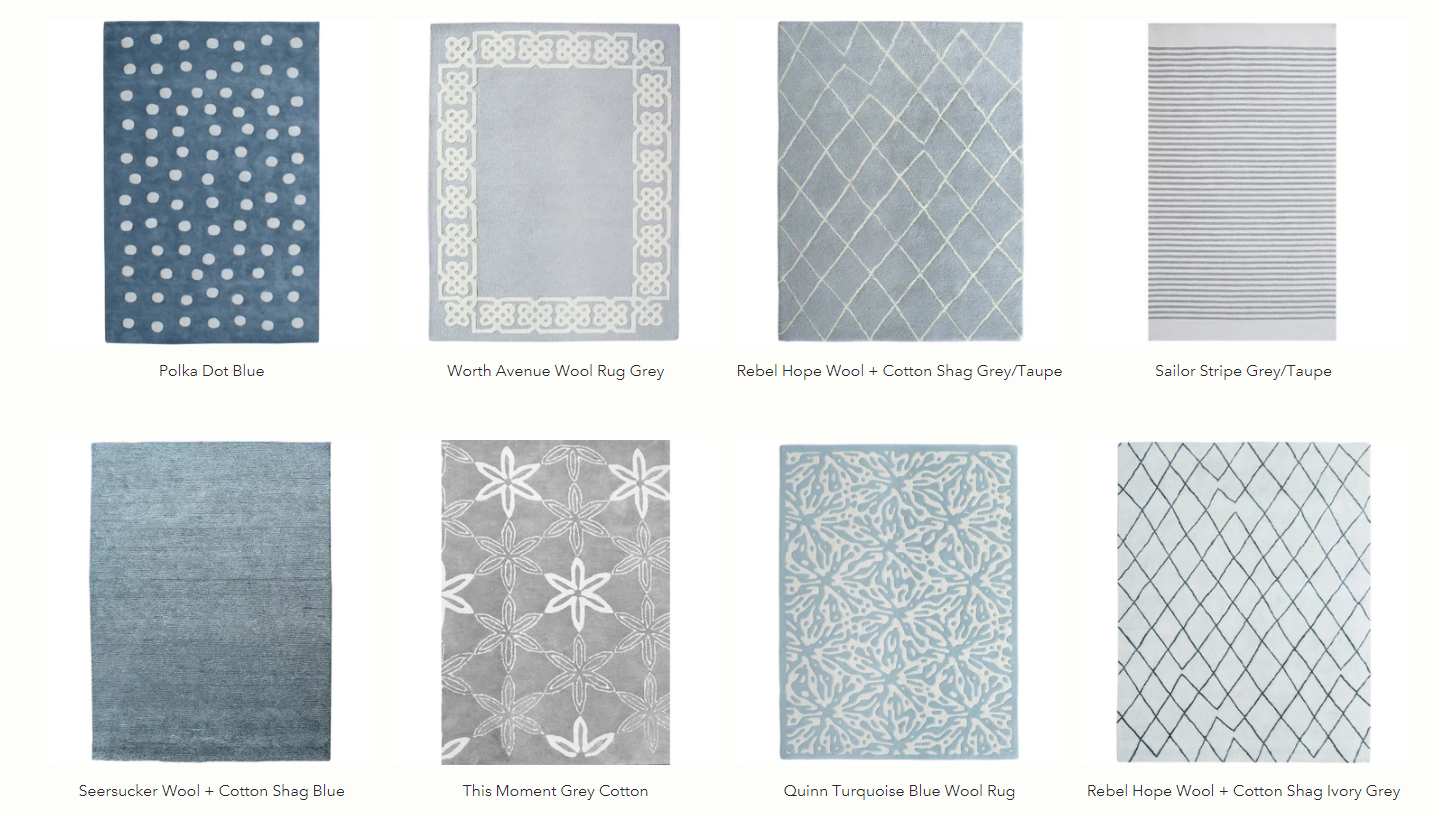
Organic Weave offers handwoven wool and natural fiber rugs that are latex free, as well as an eco-friendly.
Whether you’re searching for a statement piece or an accent rug, you will be delighted to know that you are adding something unique and beautiful to your home, as well as choosing a product that is nontoxic for you and your family.
Every Organic Weave rug is certified organic by GOTS (The Global Organic Textile Standard) and GoodWeave – their rugs are proudly handmade by skilled adult artisans who use the finest natural and nontoxic materials.
Use Coupon Code “BestOrganic” to receive 10% off at checkout.
Hook & Loom makes area rugs that are always latex free and made of recycled cotton and natural wool.
If you want to shop on Amazon, search for “hand-knotted”, “flat-weave”, “kilim”, or “braided” to find rugs that are latex free.
- Flat-Weave rugs from NuLoom are available on Amazon.
- The brand Natural Area Rugs makes natural fiber rugs and are available on Amazon.
- Safavieh has an excellent selection of flat-weave cotton rugs on Amazon.
What kind of rugs do you like? Leave any questions you may have in the comments below and we will do our best to help.
This post was originally published on November 19, 2019.


I really enjoyed your blogs about rug buying. I am looking for a latex free rug and this blog post is very helpful! Although the section “THE BEST NON-LATEX RUGS AND RUGS PADS” you have suggested natural rubber as a rug pad, isn’t that the same as natural rubber latex? To my understanding natual rubber contains latex, the sap from the tree. Could you let me know asking due to allergy. Thanks
Thanks for your question. Yes natural rubber latex contains the proteins that will cause an allergic reaction. You can get felt rug puds that are latex free. I am going to change the article to recommend felt rug pads rather than natural rubber pads, I am not sure what I was thinking to recommend a latex product to people wanting to avoid latex!
Andrea
I’m so glad to find your site because I’m allergic to both rubber and latex in rugs and anything else these products may be in. There may be some types of rubber that would not bother me, but I don’t know of any. I have found a couple of rugs at Overstock but other than that, I have had a very hard time finding rubber/latex free rugs. I’m hoping that the sites you have mentioned in your blog will finally help me solve my area rug problem but what about carpeting for rooms that need wall-to-wall carpeting. I have one room that is fully carpeted, and I am sure it’s full of latex/rubber products. Please let me know if you find out anything on chemical, Rubber, and latex free carpeting. I’m also allergic to polypropylene, formaldehyde, and probably some other chemicals that I don’t know about. Thank you.
Hi Julia, thanks for your comments! It must be frustrating to be allergic to so much 🙁 I sometimes wonder why we all aren’t allergic to these toxic chemicals! I have heard of one organic carpet company called Earth Weave, you can check them out and see what they have to offer 🙂
What about bath rugs with no latex or rubber. We have vinyl flooring and the manufacturer says to avoid latex or rubber backed rugs and non staining?